Social media use has never been higher, and neither has the argument about what it is doing to us. For every person who sees it as the best way to stay connected, informed and entertained, there is another who sees an engagement machine that rewards outrage, harvests personal data and floods the feed with content nobody can verify.
Can you trust social media in 2026? The honest answer is that you can trust parts of it, some of the time, if you know how it works. What has changed since we first published this article is that the question is no longer theoretical. Governments are legislating, regulators are fining, juries are ruling, and artificial intelligence has made it cheaper than ever to manufacture something that looks completely real.
Social media is still a brilliant source of information about almost everything, from your favourite celebrities to the latest viral trends. It is also still exposed to cyberbullying, trolling, scams and privacy breaches, and a worrying number of people take what they see at face value.
What Has Changed Since We First Asked This Question?
A quick summary for anyone who read the original version of this article:
- Social media and video networks are now the most used source of news in the world, ahead of television and news websites.
- Trust in news has fallen to the lowest level on record, and trust in news seen on social media is far lower still.
- The UK's Online Safety Act has moved from paper to practice, with age checks in force since July 2025 and a growing list of fines.
- The UK government has announced a ban on social media for under 16s, expected in spring 2027, following Australia's world first ban in December 2025.
- Meta ended its third party fact checking programme in the United States in January 2025 and moved to crowdsourced Community Notes.
- Generative AI has made convincing fake video a mainstream problem rather than a niche one.
The State of Trust in 2026
The Reuters Institute Digital News Report is the closest thing the industry has to an annual health check, and the 2026 edition, based on almost 100,000 interviews across 48 markets, makes uncomfortable reading.
For the first time, social media and video networks are the most widely used source of news globally, reaching 54% of people, ahead of the 51% who go directly to news organisations' own websites and apps. Television news and publisher owned sites have both fallen sharply since 2020.
At the same time, trust in news overall has dropped to 37%, the lowest figure recorded since measurement began in 2015. Trust fell in 29 of the 48 markets surveyed. In the United States, only a quarter of people say they trust the news most of the time.
Here is the part that matters most for this article. Globally, trust in news seen on social media sits at just 22%, and trust in news from AI chatbots sits at 20%. So people are moving towards the sources they trust least. News avoidance has climbed to 42%, and more than half of 18 to 24 year olds now name social media, video networks or AI as their main source of news.
That gap between where attention goes and where trust sits is the single best summary of the problem. People do not really trust social media as a news source. They use it anyway, because it is where they already are.
The Dangers of Social Media
The core mechanic behind fake news in social media has not changed. Information gets stripped of context, compressed into a clip or a screenshot, and passed on by people who have no way of checking it and no reason to think they need to.
A short snippet can be blown out of proportion, misrepresented, or attached to the wrong event entirely. Old video is a particular favourite. A clip recorded years ago, sometimes lifted from a film or a video game, gets reposted as if it happened yesterday, usually because it provokes a strong emotional reaction. It works. Most people never check.
Statements get attributed to people who never made them. Numbers get invented and then repeated until they feel official. And when an event is unfolding fast and the facts are not yet public, that information vacuum gets filled by whoever posts first and loudest.
Two things have made this materially worse since 2023.
The first is speed of amplification. Recommendation systems reward engagement, and nothing engages like anger. That is the practical reality of social media bias impact: the bias that matters day to day is not usually a political conspiracy in a boardroom, it is a ranking system that has learned which posts keep you scrolling. If false claims outperform corrections, false claims travel further. Analysis by ProPublica and the Tow Center found that verified accounts posting misleading media during a major conflict actually grew their audiences, which tells you exactly what the system rewards.
The second is generative AI, which deserves its own section.
AI Has Changed What Fake Looks Like
For years the standard advice on social media misinformation was to look for the tells. Bad lighting, strange hands, mismatched audio, a source that does not exist. That advice is aging badly.
When OpenAI launched its Sora video app in late 2025, feeds across TikTok, Instagram and Facebook filled with synthetic video, some of it obviously silly, some of it genuinely hard to place. A fake video of the CN Tower on fire circulated widely on Facebook, with users reacting as though it were real. Safety researchers made the point that the real shift was not the technology itself but the framing: deepfakes had been rebranded as a harmless plaything and pushed into recommendation engines. OpenAI shut the Sora app down in March 2026 after sustained criticism over deepfakes, non consensual imagery and what everyone had started calling AI slop, but the underlying capability has not gone anywhere and competitors have not stopped shipping.
Regulators have noticed. In January 2026 the European Commission opened formal proceedings against X under the Digital Services Act over the risks created by embedding its Grok AI tool into the platform, including the generation of manipulated sexual imagery, and over how its recommender systems operate.
The second order effect is arguably worse than the fakes. Once people know that convincing fake video exists, real footage becomes deniable. Genuine evidence of a genuine event can be waved away as AI. When everything might be fake, nothing has to be true, and that is corrosive in a way that no fact check can fully fix.
Fake News About Social Media Itself
It is worth flagging a category people rarely think about, which is fake news about social media. The platforms are not just a channel for misinformation, they are a subject of it.
Common examples include:
- Viral posts claiming your phone is secretly listening to your conversations to serve ads, when the far more mundane explanation is behavioural and location data, plus the fact that you searched for it earlier.
- Copy and paste posts claiming that pasting a legal notice on your profile stops a platform using your content. It does not. The terms you agreed to on sign up are the terms.
- Recurring claims that a platform is about to start charging, or is deleting inactive accounts by Friday.
- Misreporting of regulation, for example claims that the UK ban on social media for under 16s applies to messaging, gaming or existing accounts in ways that have not actually been confirmed.
- Screenshots of policy changes that were never announced, or that were announced in a different country years ago.
The lesson is simple. If a claim about a platform sounds dramatic, check the platform's own newsroom or a regulator's website before you share it. Fake news and social media is a two way street.
Real World Consequences
Here are the cases that show what happens when unverified claims meet a large audience and a short fuse.
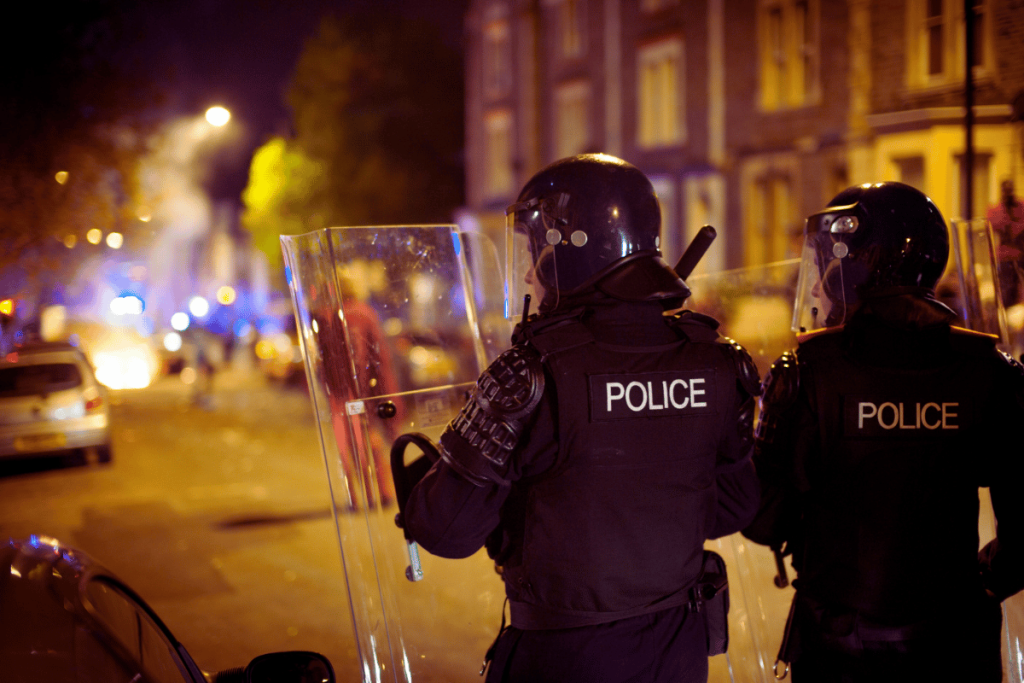
Southport and the Summer 2024 Riots
On 29 July 2024, three young girls were killed and several other children and adults injured in a knife attack at a Taylor Swift themed dance class in Southport. Because the suspect was 17, legal restrictions initially prevented him being named, which created exactly the kind of information vacuum described above.
Within hours, a false name suggesting the attacker was a Muslim asylum seeker was circulating widely, alongside claims that he had arrived in the UK by small boat and was on a security watchlist. Research by the Institute for Strategic Dialogue found that a single post carrying the false name had been viewed more than 1.4 million times within two days, and that platform recommender systems actively amplified the claims. Merseyside Police confirmed the suspect had been born in Cardiff and that the name being shared was wrong.
Rioting broke out in Southport the following night, and disorder spread to towns and cities across England and Northern Ireland over the following week, with mosques and hotels housing asylum seekers targeted. Pakistani authorities later arrested a man linked to the website that published the false name, with investigators saying the apparent motive was money from clickbait.
Southport is the clearest UK example of social media fake news producing physical harm, and it is the case that did more than any other to push the government from regulation towards restriction.
Chaos in Dublin
In November 2023, after a stabbing outside a school in Dublin city centre, false reports spread online claiming the attacker was an illegal immigrant. He was in fact a naturalised Irish citizen who had lived in the country for around 20 years. Experts told CBS News that far right accounts with significant followings on X played a key role in turning that falsehood into a street mobilisation.
RTÉ reported that prominent activists posted calls for a protest that evening, which were then recirculated and boosted by others, with one announcing he would livestream from O'Connell Street. By nightfall, vehicles were burning and shops were being looted. Ireland's police commissioner publicly asked people not to listen to the misinformation and rumour circulating on social media, which is not a sentence any police force wants to have to say during a live incident.
Unrest in Leicester
In August and September 2022, disorder broke out in Leicester between Hindu and Muslim communities, resulting in close to 50 arrests and injuries to police officers.
A key flashpoint was a false story about an attempted kidnapping that never happened, which police fully investigated and publicly debunked. Analysis reported by the Thomson Reuters Foundation found that in a 200,000 post sample of tweets about the unrest, more than half came from accounts geolocated in India, and that one of the most widely shared claims, about a temple being attacked and worshippers taken hostage, came from an influential Indian media figure thousands of miles away.
War, Propaganda and Verification
The war in Ukraine was the first major conflict documented in real time through user generated content, and also the first in which the sheer volume of manipulated video, recycled footage and state backed messaging made verification almost impossible for ordinary viewers.
The 2026 Iran conflict showed how much worse that has become. Within days of fighting starting, feeds filled with AI generated war footage alongside old clips and video game video passed off as live coverage. Researchers at RMIT's information integrity hub noted that Der Spiegel had to retract several images of the conflict after discovering they were fakes, and that X identified an individual who had hijacked more than 30 accounts, renamed them to look like war monitoring feeds, and used them to pump out synthetic war video.
The money is the part that gets overlooked. AFP's fact checking network found a steady stream of AI fakes about the war, many of them from premium accounts with purchasable blue checkmarks that are eligible for revenue sharing based on engagement. X announced in March 2026 that it would demonetise for 90 days any account sharing AI images of armed conflict without disclosing they were artificially created, and yet a blue check post sharing an AI clip of a supposed nuclear capable strike went on to get more views than the crackdown announcement itself.
Wildfires, Panic and AI Imagery
When wildfires tore through Los Angeles County in January 2025, fake images began circulating within 24 hours. The most widely shared showed the Hollywood sign engulfed in flames. It never was. The fires were miles away, the sign was standing throughout, and a live webcam feed proved it, but AI generated versions spread across X, TikTok, Facebook and Instagram anyway. One of the most viral fakes had the word Hollywood spelled incorrectly and still fooled people.
This mattered for reasons beyond embarrassment. False claims also circulated about evacuation orders and the causes of the fires while the emergency was still live, adding noise to genuine emergency communications. The timing was pointed too, landing in the same week Meta announced it was ending its third party fact checking programme in the United States.
If you want a single illustration of why fake news and social media is no longer just a political problem, this is it. During an emergency, the cost of a convincing fake is measured in wasted response and misdirected panic.
A Rapper Who Does Not Exist
Not all social media misinformation is a false claim about an event. Sometimes the fake thing is the person.
In early 2026, an anti immigration rapper called Danny Bones built a following in the UK through songs and videos laced with grievance and far right symbolism, racking up hundreds of thousands of views and streams, and he was even billed at a rally in London in May. Danny Bones does not exist. He is an AI generated persona produced by an anonymous group calling itself the Node Project, and the Bureau of Investigative Journalism reported that the party Advance UK paid the collective to produce its main campaign video, with Bones content also repurposed for by election campaigning.
The same outfit uses a second synthetic persona, a young woman named Amelia, whose character was originally created by a media literacy organisation for a Home Office funded project designed to steer teenagers away from extremism, and was then co opted by the online far right.
Whether audiences believe the character is real almost misses the point. A synthetic persona has no biography to check, no interviews to scrutinise, no past positions to hold it to and no reputation to lose. It is social media influence without any of the accountability that normally comes attached to a public figure, and European researchers expect a great deal more of it around elections.
Influencers and Financial Harm
At the end of 2022, eight social media influencers were charged with conspiring to manipulate stock prices in a scheme worth around £90 million. They promoted themselves as successful traders, talked up securities to their followers, and sold once the price rose without disclosing their intentions. The same playbook now runs constantly in crypto, betting tips and get rich quick content, which is why regulators repeatedly warn about unauthorised financial promotions by influencers.
Molly Russell and the Duty of Care
One of the most haunting cases remains that of 14 year old Molly Russell, who took her own life in 2017. The inquest concluded in September 2022 that she died from an act of self harm while suffering from depression and the negative effects of online content, with the coroner stating that the material she was served should never have been available to a child. Recommendation systems on Instagram and Pinterest fed her self harm and suicide content she had not asked for.
That case shaped the Online Safety Act, and it shapes the political mood today. If you want to understand why the UK government is willing to legislate hard, this is the reason.
Can You Trust Social Media Platforms and Companies?
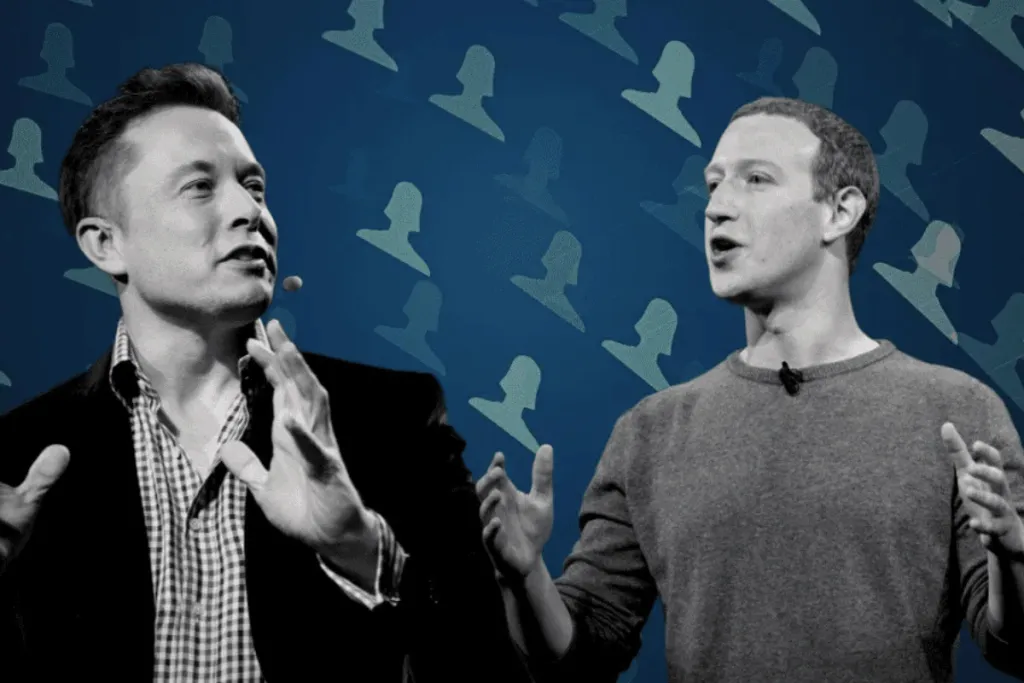
These are profit driven businesses whose revenue depends on attention and advertising data. That does not make them villains, but it does mean their incentives and your interests are not automatically aligned. The last two years have made that clearer than any previous period.
Meta: Fact Checking, Fines and Courtrooms
Meta's history with user data is well documented, from the Cambridge Analytica scandal to the 2018 breach affecting tens of millions of accounts and a record $5 billion FTC penalty in 2019, alongside repeated EU privacy fines.
The bigger change came in January 2025, when Meta ended its third party fact checking programme in the United States and moved to Community Notes, a crowdsourced model similar to the one used on X. Mark Zuckerberg acknowledged at the time that the company would catch less bad content as a result. Supporters called it a win for free expression. Researchers pointed out that evidence on crowdsourced notes is mixed at best: some studies find notes are accurate and well sourced, while the Center for Countering Digital Hate found many accurate notes were never shown to users at all. A study by the Digital Democracy Institute of the Americas went further, finding that more than 90% of Community Notes on X are never published at all.
Meanwhile the litigation has escalated sharply. In March 2026 a Los Angeles jury found Meta and Google liable for designing addictive features in a case brought by a young user, awarding around $6 million in damages. A New Mexico jury also found against Meta, agreeing the company had made false or misleading statements and engaged in unconscionable trade practices affecting children. In May 2026 Meta settled the first school district case heading to trial, part of a wave of litigation involving around 1,200 similar cases and more than 40 state attorneys general. Comparisons with the tobacco litigation of the 1990s are now being made openly by legal commentators.
X: Bots, Blue Ticks and the First DSA Fine
X has spent years dealing with questions about how many of its accounts are real, and paid verification did not settle the argument. In December 2025 the European Commission fined X €120 million, the first fine ever issued under the Digital Services Act, ruling that the platform had breached transparency obligations in three ways: the blue checkmark misled users because anyone could buy verified status, the advertising repository was dysfunctional, and researchers were not given effective access to platform data.
That last point matters more than it sounds. If independent researchers cannot study how a recommendation algorithm behaves, nobody outside the company can measure the real social media bias impact of the system, which is precisely why regulators keep pushing on it.
Instagram, TikTok and the Scam Economy
Fake accounts, cloned profiles, romance scams and investment scams remain a constant on Instagram, and marketplace fraud is a persistent issue across every platform. The pattern is familiar: a plausible looking account, a link, a site that looks legitimate for about five seconds, and a request for personal or financial details. Meta has been criticised repeatedly, including by UK police forces and consumer groups, for being slow to act on reported fraud.
TikTok continues to face scrutiny over data handling and over how quickly harmful content is removed, and it is now covered by the same UK and EU duties as everyone else.
Regulation Has Arrived
This is the biggest single change since the original article.
The UK Online Safety Act in Practice
The Online Safety Act received royal assent in October 2023, but the duties have been phased in since. The headline moment was 25 July 2025, when services hosting pornographic content became legally required to use highly effective age assurance.
Ofcom has moved from monitoring to enforcement. By early 2026 it had opened investigations into more than 90 services and issued six fines. In February 2026 it fined 8579 LLC £1.35 million for failing to put effective age checks in place, plus £50,000 for failing to respond to an information request, and issued a separate penalty against Kick Online Entertainment. Further fines have followed, including £80,000 against First Time Videos. By the end of January 2026, 77 of the top 100 dedicated adult sites had age assurance in place and a further seven had blocked UK users entirely.
Age checks have also spread across social media, dating, gaming and messaging services as a result.
The Under 16 Ban
On 15 June 2026 the government announced that social media platforms will be blocked from offering services to under 16s in the UK, with regulations expected to pass before Christmas 2026 and protections coming into force in spring 2027. The ban is set to cover Snapchat, TikTok, YouTube (though not YouTube Kids), Instagram, Facebook and X, following a consultation that received more than 116,000 responses.
There is more in the package than the headline. Livestreaming and communication from strangers will be switched off by default for 16 and 17 year olds, sexualised companion chatbots will be restricted to over 18s, and the government has said it is minded to introduce overnight curfews and limits on infinite scrolling for older teenagers.
Australia Went First
Australia banned under 16s from social media on 10 December 2025, the first country in the world to do so, with penalties of up to A$49.5 million for platforms that fail to take reasonable steps.
The early evidence is sobering. The eSafety Commissioner found that more than eight in ten Australian under 16s were still accessing social media three months after the ban, most of them as frequently as before, and opened investigations into five technology companies. Children reported working around age estimation tools with methods as basic as drawing on facial hair.
More than two dozen countries are now considering or enacting similar measures, including France, Indonesia, Brazil, Malaysia and New Zealand. Whether bans work, or simply push young people into less visible corners of the internet, is genuinely unresolved, and anyone claiming certainty either way is ahead of the evidence.
Social Media Influence on Younger Generations
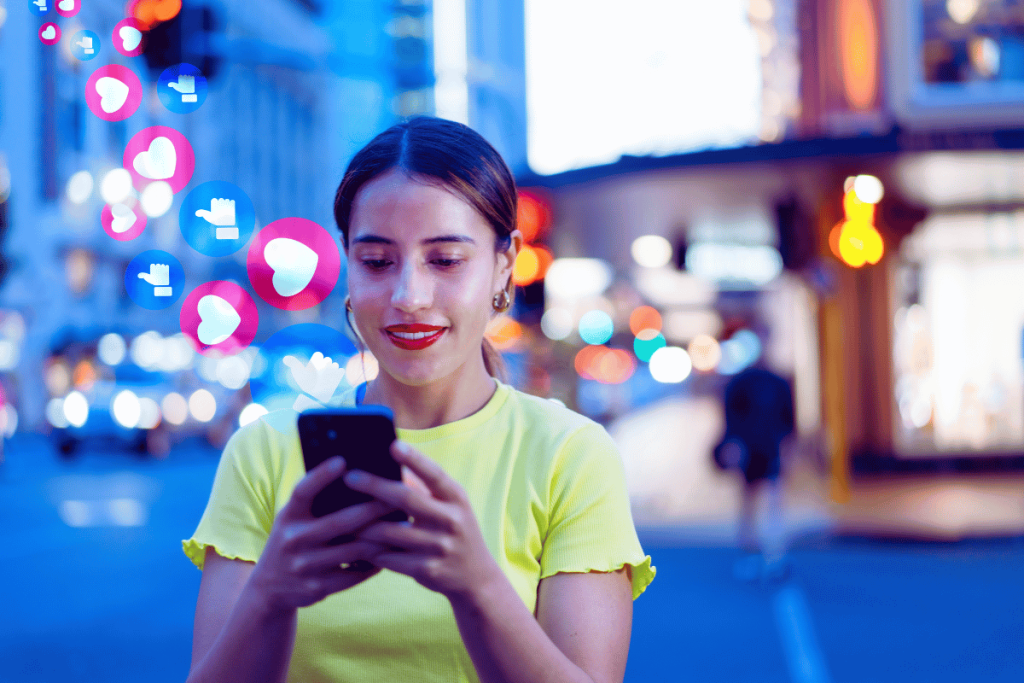
Ofcom research shows that eight in ten 16 to 24 year olds use online platforms to get their news, and that TikTok is the most used single news source among 12 to 15 year olds, closely followed by YouTube. Children consistently report that traditional news formats feel irrelevant to them, which is a distribution problem for broadcasters as much as a trust problem for young people.
The social media influence here is not simply that young people see more falsehoods. It is that the format changes what feels credible. A person talking directly to camera, in the same visual language as the rest of the feed, reads as more authentic than a studio bulletin, whether or not anything they say is checked.
Globally, around 27% of people now get some news from news focused creators and influencers, and 46% get news from creators of any type. Audiences say creators are more entertaining, easier to understand and more relatable than traditional outlets. None of those qualities is the same as accurate.
In the UK, Ipsos research found that only around three in ten Britons trust news from influencers and individuals, but that this rises to roughly half of 16 to 34 year olds, with a majority of younger people getting news from influencers every day. People are aware of the risk and consume it anyway, which is the same pattern we see in the global trust data.
This is why media literacy, or what you might call fake news awareness, has become a practical life skill rather than a classroom topic.
Can You Trust Social Media Influencers?
An influencer is simply someone with an audience. They range from celebrities and athletes, to genuine subject experts, to ordinary people who built a following from nothing.
The commercial model is straightforward. Brands pay for access to that audience, and the fee usually scales with reach and engagement. Legally, paid content must be clearly labelled in the UK, and the Advertising Standards Authority enforces this. The problem is that labelling is not the same as understanding. ASA research published in February 2026 found that influencer ads often look so similar to ordinary posts that they are hard to spot while scrolling, that around a third of the UK online population actively follow influencers for recommendations, and that around eight in ten people want paid content labelled clearly and upfront rather than being left to work it out for themselves. Vague labels such as #gifted performed poorly, while a plain "Ad" worked best.
Then there is the newer category of news influencers and commentators, who are not selling a product but are selling a perspective. There is no editorial code, no regulator, no right of reply and no correction policy. Some are excellent. Some are careless. A few are deliberately dishonest, and the format makes those three groups look identical.
So can you trust influencers? Individually, sometimes, and the ones worth trusting tend to show their sources, correct themselves publicly and tell you when they are being paid. Collectively, no more than you would trust any other stranger with an incentive.
How to Spot Fake News in Social Media
A practical checklist, which works better than trying to spot AI artefacts:
- Check the account, not just the post. How old is it? Does it post about one topic constantly? Does it have a real history?
- Look for the original source. If a claim matters, it will exist somewhere other than a screenshot. If you cannot find it anywhere else, that is the answer.
- Be suspicious of your own reaction. Content engineered to spread is content engineered to make you angry or frightened. Strong emotion is a prompt to slow down, not to share.
- Check the date and the location. Reverse image search is free and takes seconds. Recycled footage is the most common form of social media misinformation there is.
- Wait during breaking events. The first two hours of any major incident are almost always wrong. Police and emergency services publish confirmed facts, usually slowly, which is exactly why rumour fills the gap.
- Treat AI video as unverified by default. Look for a provenance label, a credible publisher, or corroboration from an independent outlet.
- Do not treat an AI chatbot summary as a source. Chatbots can misattribute, merge stories and present outdated information with total confidence. Trust in AI delivered news sits at 20% globally for good reason.
- Check corrections. Good sources correct themselves in public. Sources that never correct anything are not more accurate, they are less accountable.
10 Positives of Social Media and Social Networks
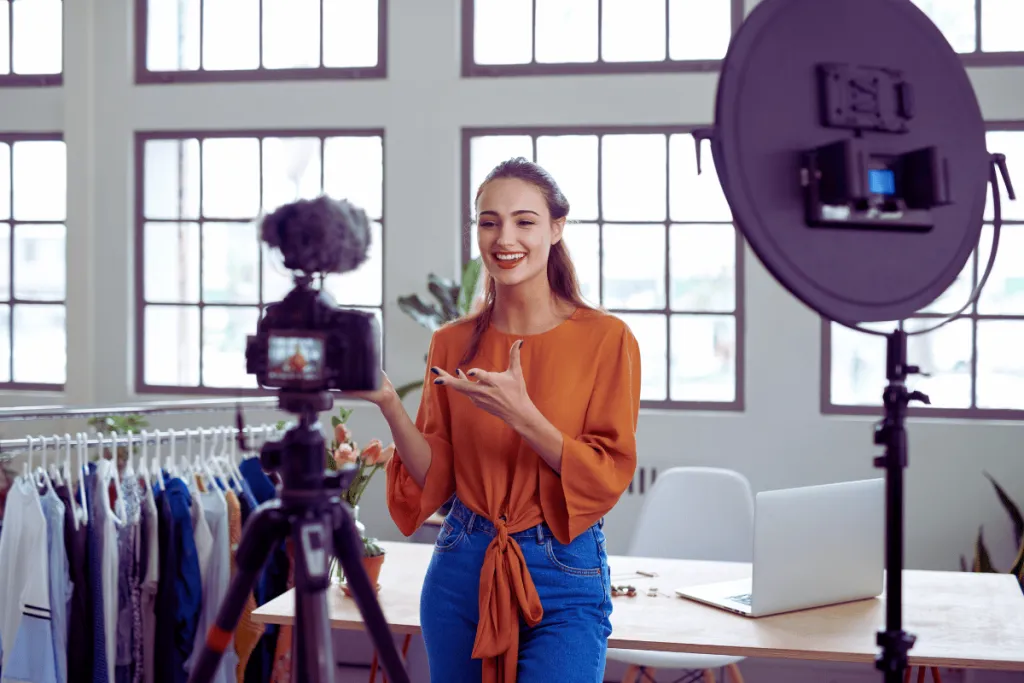
None of the above means social media is a net negative. It has changed how we communicate, organise and trade, mostly for the better.
- Keeping connected. Staying in touch with friends and family across distance and time zones remains its best feature.
- Promotion. Whether through paid ads or organic content, it is now a core marketing tool for any business.
- Building authority. Experts can share content and ideas directly with the people who need them.
- Education. Short form video has become a genuine learning format for millions, for everything from languages to trades.
- Entertainment. Sometimes a meme is just a meme, and that is fine.
- Finding a voice. Movements like #MeToo demonstrated how quickly individual experiences can become collective action.
- Supporting one another. Community groups, health support networks and local causes all rely on it.
- Growth. Social traffic supports sales, brand awareness and helps drive visitors to your website.
- Different perspectives. Exposure to lives and viewpoints you would never otherwise encounter.
- Customer feedback. A direct line between businesses and the people who use them, in online communities that would not otherwise exist.
FAQs
Can you trust what you see on social media?
Not by default. Treat it as a tip off rather than a fact. If something matters enough to act on or share, verify it against a source that has a name, a track record and something to lose if it is wrong.
Why is there so much fake news on social media?
Three reasons. It is cheap to produce, especially with AI tools. It spreads faster than accurate content because it is written to provoke. And there is money in it, either from advertising revenue on clickbait sites or from platform revenue sharing that pays out on engagement regardless of whether a post is true.
Is social media being banned for under 16s in the UK?
The government announced in June 2026 that platforms will be blocked from offering services to under 16s, with regulations expected to pass before the end of 2026 and the rules coming into force in spring 2027. Enforcement will sit with Ofcom, not with parents. Details on existing accounts and the full list of covered services are still being consulted on.
Does social media bias affect what I see?
Yes, though the mechanism is usually ranking rather than editorial. Feeds are ordered by predicted engagement, so content that provokes reactions is shown more often. Over time that narrows what you see and makes fringe views feel more common than they are. Following a deliberately wide range of sources and using chronological feeds where available both help.
How much social media is too much?
There is no universal number, but there are useful warning signs: neglecting responsibilities, losing productive time, feeling worse after using it, disrupted sleep, or anxiety when you cannot check it. If any of those sound familiar, setting limits and taking regular breaks is a reasonable first step.
Which is the best social media platform for business?
It depends entirely on your audience and goals. Facebook still has the broadest reach, Instagram and TikTok suit visual and short video content, LinkedIn works for B2B and professional audiences, YouTube remains the strongest platform for video content and search discovery, and X suits real time updates. The right answer is wherever your customers already spend time, supported by a strategy that fits your wider marketing goals.
Key Takeaways
So, can you trust social media to tell you the whole story? No. It was never designed to. It is designed to show you what holds your attention, which is a different thing entirely, and in 2026 that gap has become impossible to ignore.
The data tells a consistent story. More people than ever get their news from platforms, and fewer people than ever trust what they find there. Regulation is finally catching up, with real fines, real court verdicts and a UK ban for under 16s on the horizon. AI has lowered the cost of fabrication to almost nothing, and raised the value of verification accordingly.
None of that makes social media the enemy. It remains a genuinely useful tool for connection, learning, community and business, and most people use it perfectly well most of the time. The shift required is smaller than it sounds. Slow down before you share. Check who is telling you something and why. Assume that anything designed to make you furious was designed that way on purpose.
Social media is not going to tell you the whole story. It is up to you to go and find the rest of it.